

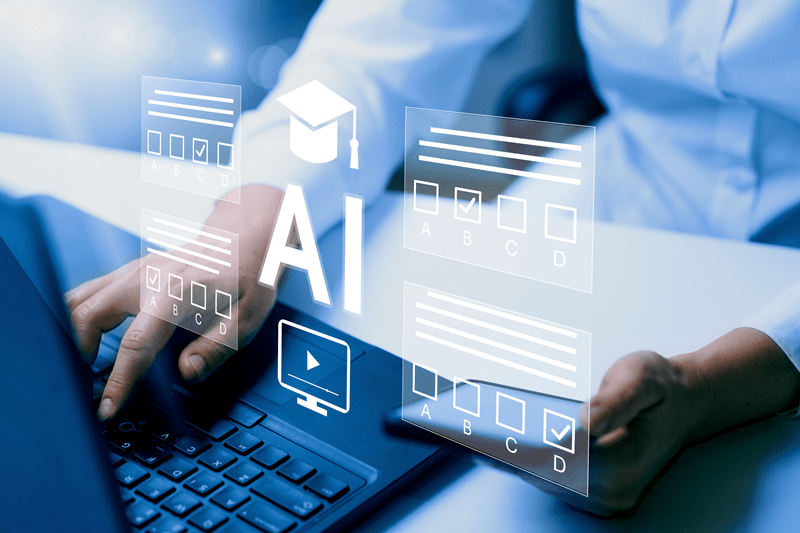
The advent of AI-proctored exams has revolutionized assessment practices by providing individuals with the flexibility to take their exams from any location. The method used for monitoring during an action taken by a student or a professional is through the use of a monitoring program that monitors the action, rather than the individual taking the action. By using AI-based exam proctoring, it has been demonstrated that these assessments are more convenient, while still maintaining the structure of a controlled environment.
More and more learning institutions as well as training programs are relying on AI-based online exam proctoring to ensure fairness in their testing processes. Therefore, it is possible for exams to be conducted without the traditional large number of examinees gathered in one location and/or at a specific time. This is very important to note and has implications beyond what many people may believe.
AI-proctored exams use technology to supervise tests without a live human watching every moment. The system checks video, sound, screen activity, and behavior patterns.
This approach usually includes.
Unlike traditional exams, AI-based online exams focus on consistency rather than constant observation. This shift reduces pressure while keeping rules clear.
Expand Your Knowledge: How AI in Research Is Redefining Academic Discovery
Assessment credibility matters deeply. Online exam proctoring software supports fairness when exams move online.
It helps by.
When used correctly, this software builds trust. AI-proctored exams rely on clear rules and transparent processes to stay effective.
Let’s break it down—remote AI proctoring begins before the exam.
Common steps include.
The system reviews activity and marks possible issues. Human review often follows. This balance keeps AI-based online exams accurate and fair.
Institutions face many challenges with large-scale testing. AI-proctored exams solve several of them.
Key benefits include.
With online exam proctoring software, institutions manage exams across regions without losing control.
Test takers also gain advantages.
Benefits include.
Remote AI proctoring allows exams to fit into real life. This flexibility supports better focus and comfort during tests.
Fairness matters. AI-based online exams aim to treat all test takers equally.
Fairness is supported by.
Concerns still exist, but a proper setup reduces the risk of bias. Clear guidelines help AI-proctored exams remain fair.
Privacy often comes up in discussions. Remote AI proctoring collects data to ensure exam security.
Essential privacy practices include.
Responsible use of online exam proctoring software protects both security and personal rights.
Learn More Here: Library Tech Innovation 2026: AI and ML Reshaping Systems
Detection relies on patterns, not assumptions. AI-proctored exams analyze movement, sound, and screen behavior.
Common signals include.
These signals trigger review, not automatic penalties. Human oversight supports final decisions in AI-based online exams.
Some misunderstandings create hesitation.
Common myths include.
In reality, AI-proctored exams flag events for review. Decisions follow clear procedures, not instant judgment.
Accessibility remains important. Online exam proctoring software can support diverse needs.
Accessibility features may include.
When designed thoughtfully, AI-based online exams increase access rather than limit it.
Preparation reduces stress.
Helpful steps include.
Understanding expectations helps test takers feel confident during remote AI proctoring sessions.
Implementation requires planning. AI-proctored exams work best with clear policies.
Key steps include.
Strong preparation supports trust in online exam proctoring software and improves outcomes.
AI assists, but humans decide. AI-based online exams usually include human reviewers.
Human review helps with that.
This partnership keeps AI-proctored exams balanced and reliable.
Exam structure has typically been poor on in-person assessments. The new and upcoming method is doing something similar but with Artificial Intelligence (AI), therefore it is performed via a digital approach rather than being dependent on a physical examination.
Some key differences between these two methods include:
Both the AI proctored model and the traditional model attempt to provide equal opportunity to their candidates but the use of AI proctored assessments allows for larger numbers of candidates to be assessed and more efficiently than with in-person traditional assessments.
We must identify some challenges associated with this way of testing.
Some common challenges to consider are listed below:
Having clearly defined support services can address these problems and allow for the ongoing development of AI driven exams.
Ethical use builds trust.
Best practices include.
Ethics matter as much as technology in remote AI proctoring.
Global education needs flexible tools. AI-proctored exams support learners across locations.
They enable.
This reach makes online exam proctoring software valuable for global programs.
Integrity remains the core goal. AI-based online exams protect academic standards.
They support integrity by.
Strong integrity builds confidence in credentials earned through AI-proctored exams.
Technology evolves constantly. Online exam proctoring software improves through feedback.
Improvements focus on.
Ongoing updates help AI-proctored exams stay relevant and trusted.
Testing continues to change. AI-proctored exams represent a shift toward flexibility and fairness.
This shift means.
Change brings responsibility alongside opportunity.
On a Related Note: AI Tools for Deep Research That Help You Think Smarter
An exam performed via AI Proctoring Audit gives students the freedom to choose when to take their exam, while providing unbiased and transparent feedback using both technology (AI) and the traditional method of having an instructor evaluate the student’s performance via a human review. Type sure that when using such software for your exams, you provide adequate levels of monitoring and reviews to ensure policy compliance and the promotion of academic integrity. AI Proctors will continue to play a leading role in making online education available to all e-learners, while providing an equitable level of support to all those who use it.
No. The software only monitors your screen activity during the exam. It cannot browse your personal files, documents, or history outside the testing browser.
Minor, incidental interruptions are usually fine. The software is smart enough to tell the difference between a quick distraction and a pattern of cheating. If something happens, just continue with your test. A human reviewer will see the context if it gets flagged.
You need a reliable connection and a working webcam. Very high speed is not usually required. The testing platform will list the minimum system requirements. Always test this before your actual exam.
Always contact your testing institution well in advance. They can arrange accommodations, which might include a human proctor instead of AI, extra time, or different setup procedures. The rules for fairness apply here, too.
This content was created by AI